October 31, 2026, updated November 4, 2026. 3 min read. By Hell Nah team.
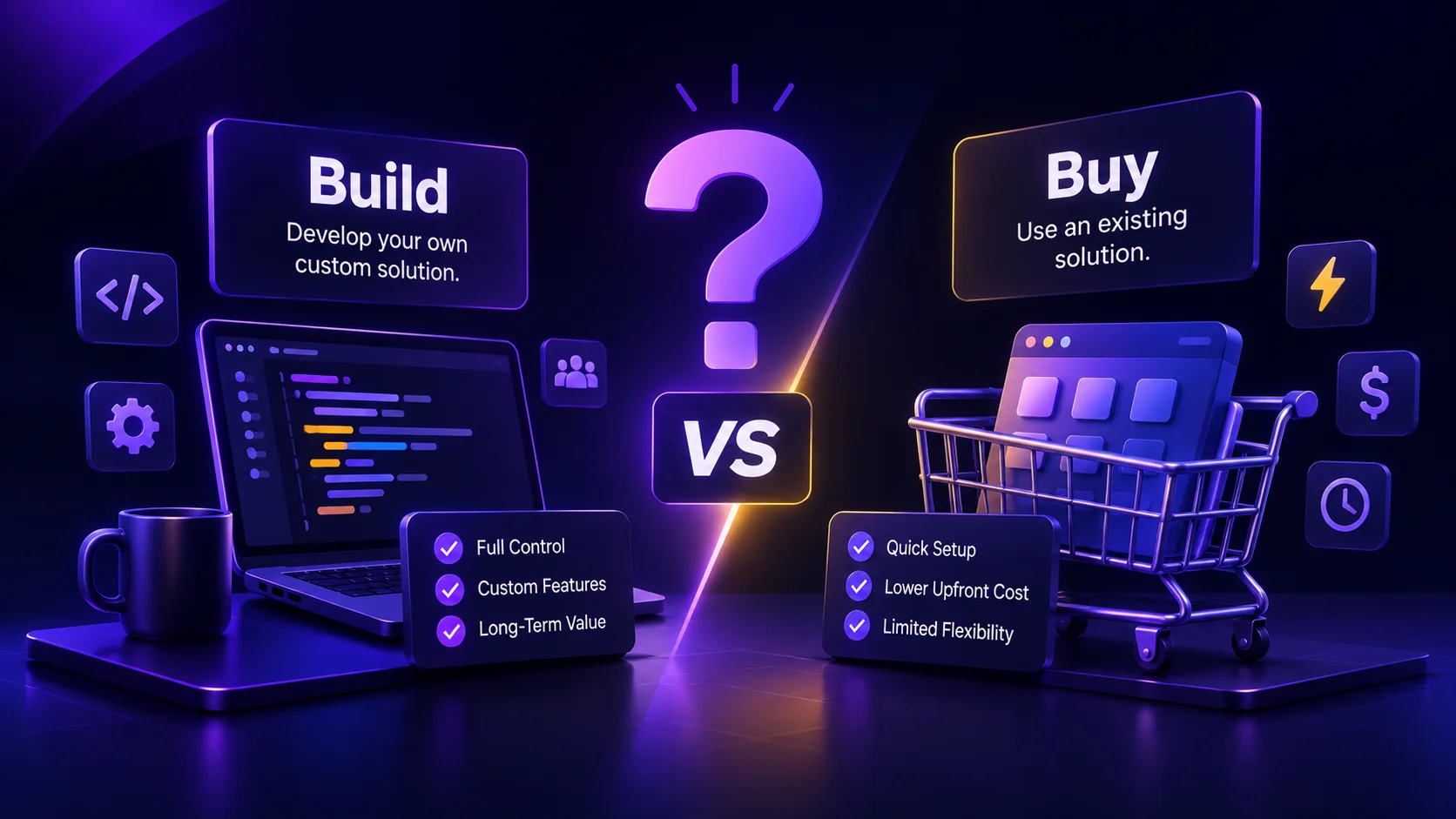
We build custom software for a living, so take this with that in mind: most businesses should buy most of their software. Paying for a good off-the-shelf tool is often the best decision you can make, and we'll tell you so.
But there are cases where buying costs you more in the long run. Here's how to tell them apart.
Start by asking what makes you different
Split what your software needs to do into two piles:
- Things every business does: accounting, email, payroll, chat, sign-in, standard reporting.
- Things that are how you compete: the way you price, schedule, match, route or serve customers, in a way your competitors don't.
Buy the first pile. Nobody ever won a customer with a better payroll system. Consider building the second, because if the software is your advantage, buying the same tool as your competitors gives it away.
When buying is the right call
Buy if most of these are true:
- A tool exists that does at least 80% of what you need
- You can change your process to fit the tool without hurting customers
- The job isn't what customers choose you for
- You don't have anyone to look after custom software once it's built
- You need it working this month
That 80% figure is a rule of thumb, not a law. The real question is whether the missing 20% matters.
When building makes sense
Building starts to earn its keep when:
- Your process is your advantage, and forcing it into a generic tool would make you ordinary.
- You've outgrown the workarounds. People spend hours moving data between tools, or running the business from a spreadsheet nobody dares touch.
- Per-seat pricing has stopped making sense at your size. Work out the real five-year cost before deciding this one.
- You need to own the data or the rules, for regulatory or contractual reasons.
- The software is the thing you sell. This is the plainest case, and it's why SaaS products are built.
Compare the real costs
The usual mistake is comparing a subscription fee with a build price. Neither is the whole number.
| Cost | Buying | Building |
|---|---|---|
| Up front | Low: setup and training | High: design and development |
| Every year | Subscriptions, rising with use | Hosting and maintenance |
| Changing how it works | Often impossible | Your choice, at your cost |
| Hidden cost | Staff time on workarounds | Keeping the people who understand it |
| Biggest risk | Vendor raises prices or shuts down | The build runs late or goes unused |
Count staff time honestly. If five people each lose an hour a day to a workaround, that's a real and recurring cost, even though it never shows up on an invoice.
The third option: buy, then connect
You rarely have to choose only one. Often the best answer is off-the-shelf tools with a small custom layer: buy the accounting system and the CRM, then build a thin piece that links them and handles the one step that's unique to you. A good API layer can be much cheaper than either replacing everything or living with the gap.
A simple test
Try writing this sentence: "We need custom software because ____, and no existing tool can do it, because ____."
If you can fill in both blanks with something specific, it's worth a proper conversation. If the second blank is "we haven't really looked", spend a week trialling tools first. It's the cheapest research you'll ever do.
Common questions
Can we start with a tool and move to custom later?
Yes, and it's often the best route. Using a tool teaches you what you actually need, and the custom version is then built on evidence. Just check you can export your data before you commit.
What about no-code tools?
They're good for internal tools and for testing an idea. They get harder to work with when logic grows complicated or usage grows large, so plan for what happens if you outgrow them.
We already built something and it isn't working. Now what?
Don't assume it has to be thrown away. Read why rewrites are usually a trap, and consider an audit to find out what you've really got.
Working on something like this?
Tell us what you’re building. We reply within two working days, and if we’re not the right fit, we’ll say so.
Related service: Custom web application development