October 31, 2026, updated November 4, 2026. 3 min read. By Hell Nah team.
The most common way a SaaS product fails early isn't bad code. It's spending the budget building things nobody turned out to need, before anyone has paid for anything. A first version should be small enough to feel slightly embarrassing, and good enough to charge for.
What an MVP is for
A minimum viable product exists to answer one question: will someone pay for this?
That rules out two common mistakes:
- A demo that can't be used. If people can't get real work done with it, you won't learn whether they'd pay.
- A complete product with one more month to go. That month keeps repeating, and all that time you're guessing.
How to choose what goes in
Write one sentence: "[Type of person] can use this to [do one job] and get [one result]."
Then go through your feature list and ask of each item: can that person get that result without this? If yes, it isn't in the first version.
Take a hypothetical tool that helps small clinics manage appointment reminders:
| Feature | First version? | Why |
|---|---|---|
| Upload a list of appointments | Yes | Nothing works without it |
| Send text reminders | Yes | This is the whole product |
| See who confirmed | Yes | It's the result people are paying for |
| Billing | Yes, but simply | You can't test paying without it |
| Calendar integrations | Later | A file upload proves the idea |
| Team roles and permissions | Later | The first customers are small |
| Custom message templates | Later | Wait until someone asks |
| Analytics dashboard | Nah | A weekly email will do for now |
What you can do by hand
Lots of things that look like features can start as a person doing a job. Early on that's a good thing, because you see exactly what customers do.
- Sign-up: do the onboarding yourself over a call. You'll learn more from those calls than from any analytics.
- Reports: run a query once a week and send it by email.
- Admin: a protected database tool can stand in for an admin panel for months.
- Invoices: send them manually until you have enough customers for it to hurt.
Automate something when it starts to hurt, not when you imagine it might.
The boring parts you can't skip
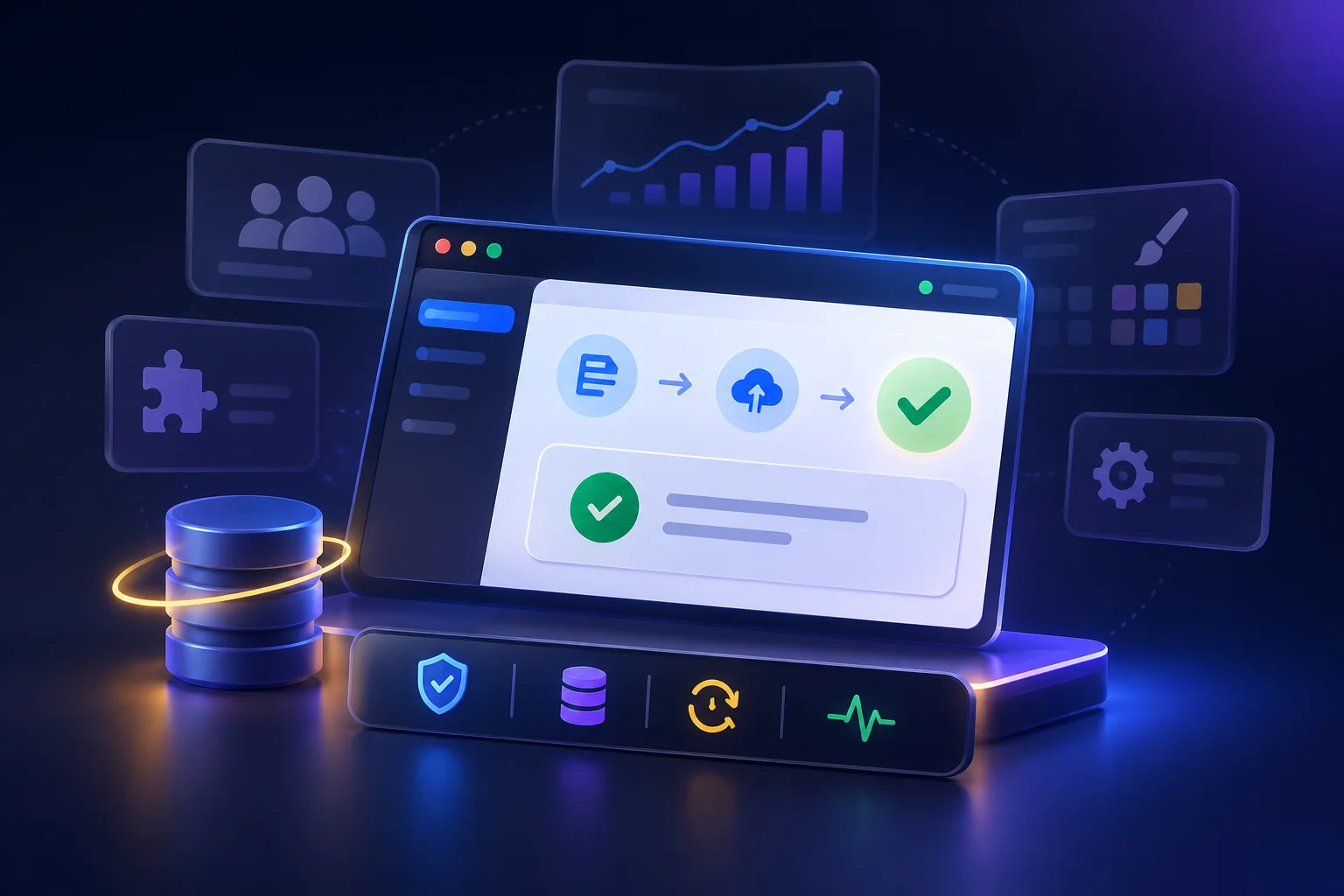
Keeping scope small doesn't mean cutting corners on the things that are expensive to fix later:
- Security basics. Use a proven sign-in service, encrypt traffic and keep secrets out of your code.
- Keeping customers' data separate. In a multi-customer product, one customer must never see another's data. Design this in from the first day, because adding it later is painful.
- Backups you've actually tested restoring.
- Error monitoring, so you find out about problems before your customers tell you.
- Tests on the paths that matter, especially anything involving money.
How to know it's working
Pick the numbers before you launch, so that you can't talk yourself into a good story afterwards:
- Are people coming back without being reminded?
- Is anyone paying, or at least asking how to?
- If you took it away, would anyone complain?
If the answer is no after honest effort, that's the MVP doing its job, and it just saved you from building the rest. Use what you've learned to change direction.
Common questions
How long should an MVP take?
We typically aim for a first release in 8–12 weeks, because longer usually means too much is in it. If yours can't be done in that time, look hard at the list again.
Should the MVP be a web app or a mobile app?
Start with a web app unless your idea depends on the phone itself, such as location or the camera. It's faster to build and change, and you don't wait on store reviews.
Which technology should I use?
Whatever you can hire for next year. React, Next.js, Node.js and PostgreSQL are widely known choices. Your stack matters much less at this stage than finding out whether anyone wants the product.
How much will it cost?
See our guide to what custom software costs, which includes a sum you can run yourself.
Working on something like this?
Tell us what you’re building. We reply within two working days, and if we’re not the right fit, we’ll say so.
Related service: SaaS development